
Restaurent Management System
Overview
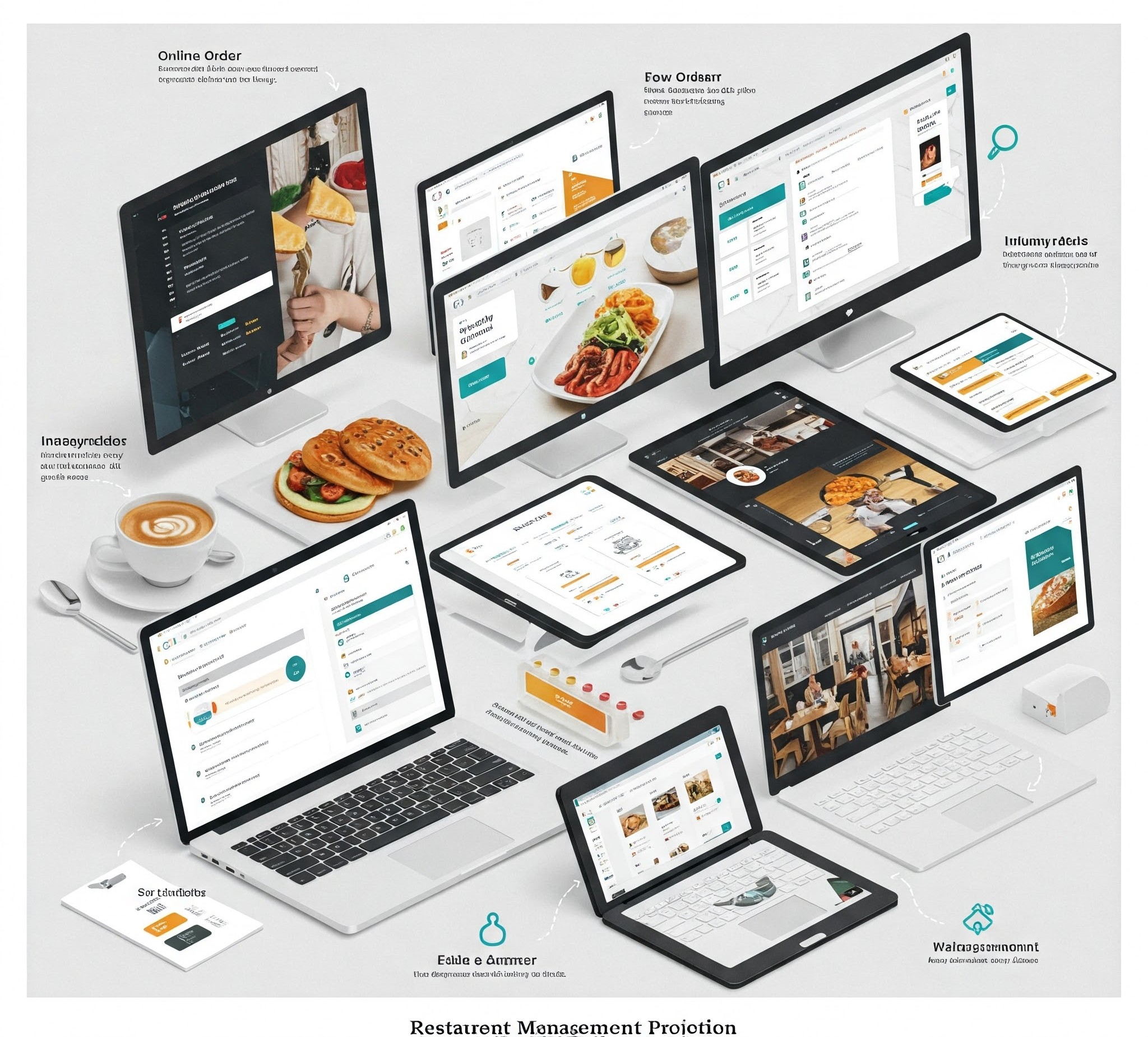
The Restaurant Management System is a comprehensive web-based application designed to streamline and enhance the operations of a restaurant. This system aims to provide an efficient and user-friendly platform for managing various aspects of a restaurant, including order processing, inventory management, table reservations, customer interactions, and employee management.
Stratagy
Company Development Project
Project Type
Full Stack Development & Design
Client
ARK-Hub (Selft)

The frontend of the application is built using HTML, CSS, and JavaScript, with React as the primary library for building the user interface. React's component-based architecture allows for the creation of a dynamic and responsive interface, ensuring a smooth and interactive user experience. The frontend is designed to be intuitive, enabling restaurant staff to easily navigate through various features such as order management, table booking, and menu updates. Additionally, the use of CSS ensures a visually appealing design that aligns with the restaurant's branding, while JavaScript handles client-side interactivity and real-time updates.
On the backend, the system utilizes Node.js as the runtime environment for server-side processing, paired with the Express framework to handle routing and middleware functionalities. This combination ensures a robust and scalable backend architecture capable of handling multiple requests simultaneously. The backend is responsible for processing data, managing business logic, and interacting with the SQL database, which stores all critical information such as menu items, customer details, order history, inventory data, and employee records.
Key features of the Restaurant Management System include order management, which allows staff to take, modify, and track orders efficiently; table reservation management, enabling customers to book tables in advance and staff to manage seating arrangements; inventory management, which tracks stock levels and alerts staff when supplies are low; and employee management, which handles staff schedules, roles, and performance tracking. Additionally, the system can generate reports and analytics, providing insights into sales trends, popular menu items, and customer preferences, helping restaurant owners make informed decisions.