
Heart Rate Detection By using Pupil
Overview
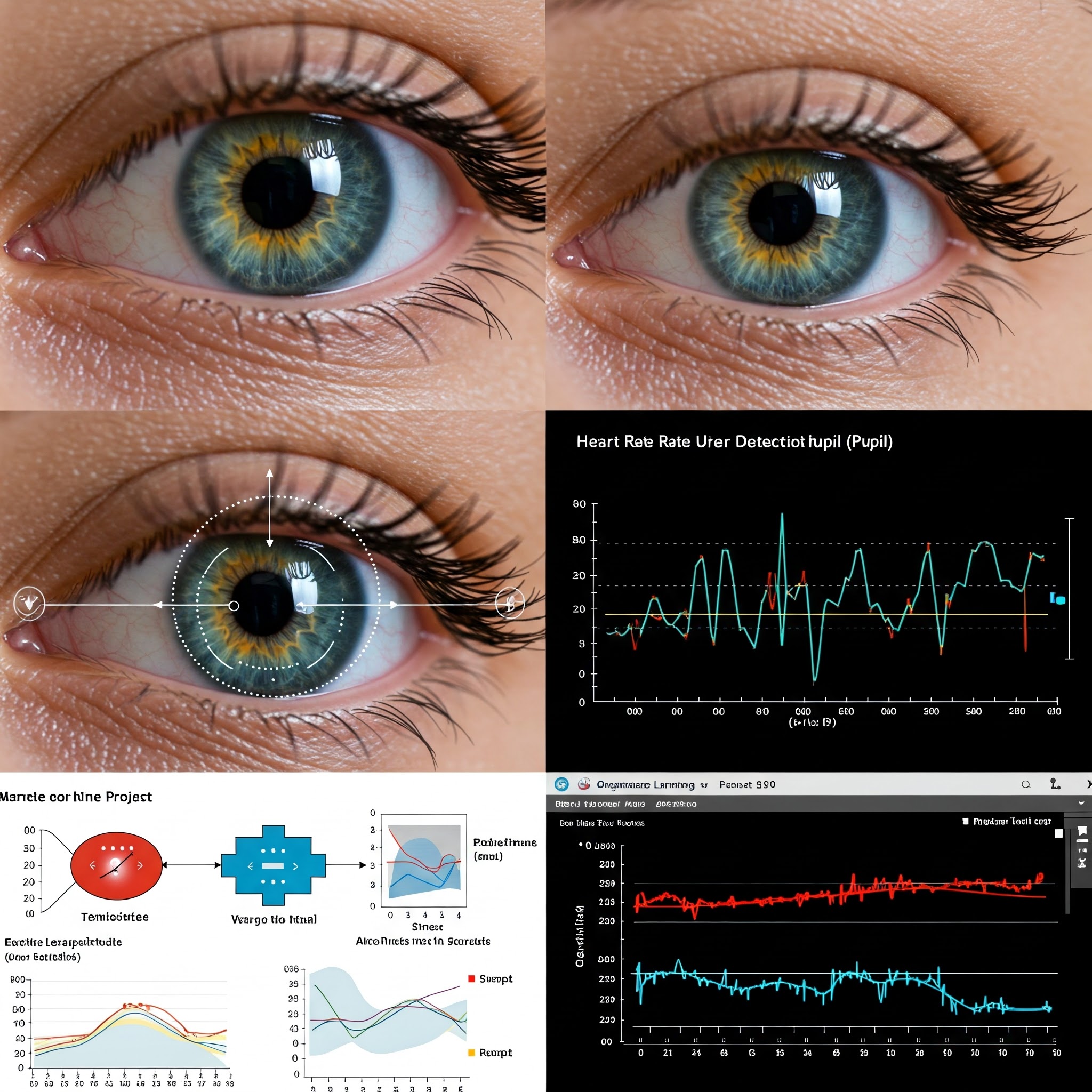
The Heart Rate Detection by Using Eye (Pupil) project is an innovative application of Artificial Intelligence (AI) and Machine Learning (ML) technologies to measure heart rate non-invasively through the analysis of eye pupil movements.
Stratagy
Company Development and Design
Project Type
AI and ML Development & Design
Client
VJ tech & Brainovision

This project falls under the category of health-tech innovation and combines elements of computer vision, biomedical signal processing, and machine learning. By leveraging the subtle changes in pupil size and movement, which are influenced by the autonomic nervous system, this project aims to provide a contactless and convenient method for heart rate monitoring.
This approach is particularly useful in scenarios where traditional methods like wearable devices or chest straps are impractical or uncomfortable. The project utilizes AI algorithms to process video footage of a user's eye captured via a camera. Advanced computer vision techniques are employed to detect and track the pupil's size and movement patterns in real-time. Machine learning models are then trained to correlate these patterns with heart rate data, enabling accurate and reliable predictions.
The use of deep learning frameworks such as TensorFlow or PyTorch, along with image processing libraries like OpenCV, plays a crucial role in achieving high precision and efficiency. Additionally, the project may incorporate signal processing techniques to filter noise and enhance the accuracy of the detected heart rate. This project is classified as a research and development (R&D) initiative with potential applications in remote healthcare monitoring, fitness tracking, and mental health assessment. It represents a significant step forward in the field of non-invasive biometric sensing, offering a user-friendly and accessible alternative to traditional heart rate monitoring methods.